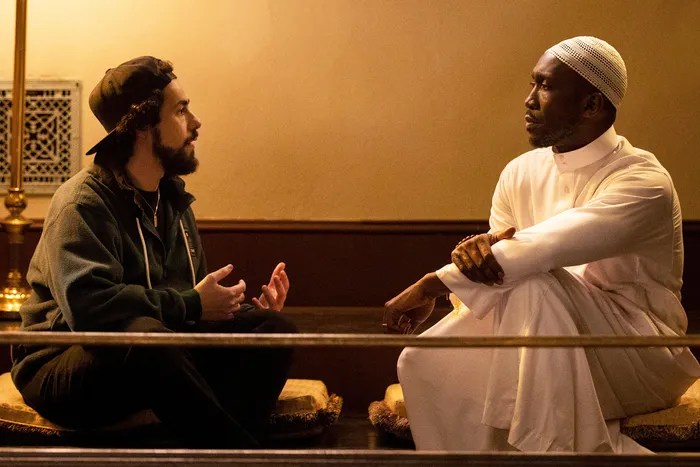
There are 2 types of users who have commented really positively about Hudhud Quran and its potential – parents with kids, and adults of all ages who are either introducing or reintroducing themselves to a spiritual connection (think @Ramy, who starts off misunderstood as a forming but well-intentioned character and is slowly revealed as exceptionally lost. Yet if there’s hope for Ramy—and he probably wanted you to know this—there’s certainly hope for you, too).
For the latter, it reminds them of the child versions of themselves that had a specific spiritual centre they now want to reconcile with a new understanding of the world. Perhaps they also feel a lack of connection to a community that would meet them where they are without expectations.
Up until now, they have gravitated to apps like Calm, which intentionally strip religion to remove the connotations and judgement. But the connotations and judgments, to me, are things far easier to strip away. And definitely the less useful.
I use “they,” though I could easily type “I.” In fact, “I” was the first user in mind for this app, and I want to break the taboo by admitting that “I” too will ebb and flow, but hope to always have the gratitude connection.
That’s why placing gratitude and Quranic beauty at the heart of this app helps with this. Those are 2 things that you can feel alright going back to regardless of where you are in your journey.
It makes me laugh when I read things like “Muslims are not a monolith” from a reputable journalist, as though it is a profound statement. Just like someone else will laugh when I type “a single Muslim’s journey isn’t even monolithic,” because that is equally unprofound, though equally true.
Point being, whether you are helping your child smile through learning the Quran, or you are someone that wants to type their gratitudes in the same place as the Quran, I hope this app helps you find continued peace.
Plus, [spoilers], maybe Sheikhs can give this app when they see someone that has only walked a few steps in their journey. Hudhud is probably the better companion than the Sheikh’s daughter for all involved until peace is found non-codependently.
Je suis actuellement en train d’apprendre le français. Ainsi, j’ai décidé d’écrire quelques mots chaque jour comme réflexions quotidiennes. J’espère que ChatGPT aura de moins en moins de corrections à faire chaque jour.
Le sujet d’aujourd’hui concerne les affirmations. C’est un thème qui suscite beaucoup de doutes chez certaines personnes. Elles lèvent les yeux au ciel et le rangent dans la catégorie de la pseudoscience. Cependant, je soutiens qu’elles peuvent être puissantes dans certains contextes. Elles jouent un rôle très important dans un aspect spécifique du parcours de santé mentale : lorsqu’une personne les prononce à partir d’un état de désespoir. Quand elles semblent mensongères, l’individu doit accomplir certaines actions pour y croire, et en les affirmant, cela l’aide à croire. Une fois la croyance établie, les affirmations servent de rappel. La personne a besoin de ce rappel, sinon elle risque de devoir recommencer le processus. Et finalement, cela devient une affirmation.
Prises isolément, les affirmations peuvent certainement sembler relever de la pseudoscience. Mais accompagnées d’actions, elles acquièrent une importance qui diminue progressivement à mesure que les mots proviennent d’une personne avançant dans son processus.
Alors, pour une personne qui a déjà confiance en elle ? Elles n’apportent pas grand-chose. Pour une personne qui a besoin de ces mots pour l’aider ? Elles possèdent un véritable pouvoir.
Je suis en train d’apprendre le français actuellement. Donc, j’essaie d’écrire quelques pensées chaque jour comme réflexion. J’espère que ChatGPT me corrigera de moins en moins chaque jour.
Je sais qu’il existe de nombreuses façons d’écrire des histoires. Il y a assez d’écrits et de blogs qui tentent de poser des questions : D’où vient l’idée ? Comment la trouve-t-on ? Comment peut-on améliorer notre créativité ?
Peut-être que je pourrais également essayer de suivre le même sujet, mais je le laisse pour un autre jour lorsque j’ai un blocage de pensées.
Au lieu de cela, je veux exprimer le fait que je vais faire une tentative pour créer une histoire, avant de vous expliquer comment je la trouve. On peut commencer par les méthodes que je suis souvent. Plusieurs fois, j’utilise la méthode de trouver une morale à transmettre, une leçon que je veux que le lecteur apprenne, puis je trouve l’intrigue et les personnages avec lesquels je peux la dissimuler dessous.
Cela donne un impact à la fin de l’histoire. Mes personnages sont faits pour servir l’expérience, ils ne sont pas au centre de l’histoire. Il y a un but spécifique. Mais malgré tout, je sais que ce sont leurs fables, alors je trouve un moyen de souligner leur humanité avec une anecdote forte qui met en valeur leur caractéristique spécifique qui semble ne pas être dans l’objectif que j’ai déjà énoncé. Ainsi, le public peut visualiser, mais malheureusement, c’est la seule chose qui donne cet effet. Donc, les personnages ne sont pas vides, mais ils ne sont pas non plus complets. Ils sont là pour la progression de l’histoire afin de donner au narrateur, ou même à lui-même, l’opportunité de dire quelque chose qui aurait peut-être été placé dans un monologue.
La prochaine fois, je veux faire quelque chose de différent. Je veux essayer d’être moins sérieux. Je veux parfois courir sans direction. Je veux créer un univers. Des personnages. Des paysages. À partir desquels une histoire peut émerger.
Il y a des moments dans ta vie où tu dois suivre la dynamique que tu as développée dans la dernière partie de ta vie. Tu dois recevoir les prières et profiter de tes bons efforts pour te permettre d’être au mieux fondé pour créer la prochaine partie de ta vie.
Parfois, tu es chanceux et tu peux utiliser ce temps-là pour gagner l’inspiration pour les prochaines étapes. Peut-être es-tu encore plus chanceux et tu peux former le plan dont tu as besoin pour être en direction de tes espoirs. Peut-être plus chanceux encore, et tu peux développer les compétences, voire mieux, pour créer les fondations sans abandonner les responsabilités de cette étape.
Mais parfois, tu as besoin d’inspiration qui n’est possible que dans l’espace négatif dont nous avons déjà parlé. Alors, tu dois utiliser le temps pour vider tout ce qui peut te retenir.
Après, lorsque tu trouves cette inspiration, développe un plan, tu dois suivre le plan. Tu dois dire non souvent. Mais quand il y a une inspiration qui vient du vide, n’hésite pas à dire oui.
Profite du plan, mais les plans sont faits pour être changés. Ils sont faits pour toi, pas contre toi. S’ils grandissent, tu peux grandir avec eux.
J’ai pris du temps pour améliorer mon français maintenant. Alors, je pense que je vais faire de petites réflexions chaque jour. J’espère que les corrections que ChatGPT fait vont être de moins en moins nombreuses chaque jour 😉
C’est un concept bien connu que l’une des choses les plus difficiles à vivre est d’être à la fois le sculpteur et la sculpture. Quand tu lances un marteau sur toi-même, tu vas ressentir la douleur de chaque coup. Ainsi, chaque erreur fera mal à ressentir : quand elle est commise pour la première fois intentionnellement, et les tentatives suivantes qui veulent la corriger. Il est donc naturel que l’amélioration de soi soit une tâche difficile, et un sujet de nombreux livres dans le genre de l’auto-assistance.
La majorité de ces livres parlent de la douleur la plus profonde. Il arrive un moment où ta place dans ta vie te fait du mal, ton chemin compromet ton avenir, ton potentiel diminue si tu ne changes pas, et tandis que la douleur de changer est grande, la douleur d’être le même est encore plus grande.
C’est cet écart qui crée la motivation pour le changement. Et l’espoir, ensuite, est que tu puisses le trouver quand ta discipline t’empêche d’avancer.
Mais par définition, cela fait mal à toi et à ta confiance. Pour les grands changements, peut-être que c’est nécessaire, mais y a-t-il une façon de prendre ce chemin sans abattre ton esprit ?
Je suis en train de l’expérimenter, mais je pense avoir trouvé une clé : suivre sa curiosité avec un mélange de discipline, passion, et patience à la fois.
Il est trop tôt pour parler davantage de mes expériences personnelles. Mais je pense que tu ne peux pas toucher cette curiosité si ta santé n’est pas au rendez-vous. Santé de ton corps, de ton esprit, de ton mental, et ta confiance.
Après tout, tu as besoin de la confiance en toi-même pour suivre tes instincts qui disent que tu dois suivre ta curiosité. Et après ça, plus de détails forment la sculpture, avec moins de douleur après chaque coup de marteau.
J’ai pris du temps pour améliorer mon français maintenant. Alors, je pense que je vais faire de petites réflexions chaque jour. J’espère que les corrections que ChatGPT fait vont être de moins en moins nombreuses chaque jour 😉
Il y a quatre ans, peut-être que la pandémie nous a appris des leçons qu’on a oubliées ou qu’on a carrément ignorées. Il semble qu’il vaut mieux ne pas les laisser de côté. Je pense qu’en faisant un parallèle, ça pourrait nous aider de façon positive de manière pas tout de suite évidente dans notre quotidien.
La pandémie a commencé aux États-Unis, en Californie, le cœur de la Silicon Valley, le centre du secteur technologique, et là où probablement on trouve le plus grand nombre de gens capables de comprendre des stats. Une personne avec ces compétences a analysé les données de la Chine et a remarqué que la Californie semblait suivre le même modèle au début. Mais beaucoup ont raté le fait que la COVID-19 se propageait de manière exponentielle. C’est-à-dire, si deux personnes attrapent le virus une semaine, il pourrait y avoir 4 cas la semaine suivante (2×2), puis 16 (4×4), et ça augmente rapidement jusqu’à 256 (16×16), et même 65 536 après!
C’est un concept difficile à saisir pour beaucoup, même s’ils le comprennent théoriquement. Ça a été démontré par le comportement des gens dans une ville qui est censée comprendre les chiffres.
La vitesse à laquelle quelque chose peut grandir de façon exponentielle est difficile à imaginer, que ce soit dans un cycle négatif, comme avec le COVID, ou positif, comme le progrès technologique.
Par exemple, en ce moment, l’IA, comme ChatGPT, connaît une croissance exponentielle. Cela signifie que dans ton travail, tu dois prendre en compte cette croissance. C’est pas facile, mais c’est mieux d’essayer sinon tu risques de te retrouver à la traîne.
Et dans la vie de tous les jours, si quelqu’un veut améliorer une compétence, il se fait du tort en ignorant les méthodes qui peuvent lui offrir une croissance exponentielle. Par exemple, c’est plus efficace de parler une langue avec quelqu’un que de seulement lire des livres pour l’apprendre. Tu auras probablement une croissance exponentielle en combinant les deux, tout en écoutant aussi des émissions en français, en faisant des exercices et en écrivant par toi-même.
Ainsi, tu peux te retrouver au cœur d’un cycle de rétroaction positif, bénéficier d’une croissance personnelle exponentielle et vraiment profiter de ces avancées.
J’ai pris du temps pour améliorer mon français maintenant. Alors, je pense que je vais faire de petites réflexions chaque jour. J’espère que les corrections que ChatGPT fait vont être de moins en moins nombreuses chaque jour 😉
Aujourd’hui, je réfléchis aux espaces négatifs. Ces brefs moments de répit dans l’esprit, sans aucune pensée qui le traverse. Ces espaces négatifs où de nouvelles idées peuvent émerger, pour le meilleur ou pour le pire. Des espaces sans direction définie, qui ne cherchent pas à en avoir une. Je ne parle pas des idées complètes qui surgissent avec force et tumulte, puis tombent dans un silence instantané, occupant un espace physique à ce moment-là. Non, elles n’étaient pas là, mais elles trouvent un instant de silence, se mêlant à la quiétude, au vide, à l’espace négatif, sans que l’on sache si elles émergeront de cette négativité pour devenir positives.
Je pense à l’espace négatif, mais pas dans un contexte artistique. Plutôt dans le contexte de la vie.
Quand tu te trouves dans une pièce, tu observes les objets qui occupent l’espace.
Un tableau, une table, des plantes, un piano.
Mais c’est l’espace négatif qui te donne l’opportunité de respirer. De réaliser qu’il y a bien plus de place pour grandir, même si ce n’est pas nécessaire. De trouver la paix. Cet espace où le monde s’ouvre, est présent, avec bien plus de potentiel, et pourtant déjà complet.
Les enfants voient dans l’espace négatif une source d’excitation et de possibilités. “C’est là que je veux créer,” pensent-ils. Beaucoup d’adultes perdent ce sens de l’aventure. Mais certains le conservent, découvrant ainsi d’autres secrets. Ils apprennent la valeur de laisser cet espace tranquille, de simplement l’observer.
“There are no bad voices, just untrained ones.” – Ben Said from the Gam1ng Café
It was a nostalgic feeling to set foot in a gaming café as an adult and request the computer for a day, even if my plans differed than anything I could have imagined as a kid. Unfortunately, my laptop was not made with a graphics card strong enough to handle the training of a machine learning model, so I was grateful the institute of my FIFA gaming youth was able to step in and approve my off-brand request.
“So you want to make a model of your voice… and then have it… sing? Why?” – I was asked.
“Because I can’t sing. Want to hear?”
My sure-fire ticket was an unconventional one: me singing a clearly very funny and embarrassing version of a song I wrote inspired by Walid Sahrij’s Haliana (click to hear the classic original, or below to see my rendition).
Samnanai:
Like you, he agreed that it needs all the help it can get and gave me the best computer available.
Now, I can follow the online cooking recipe blueprint and continue typing a wall of text about how it was done, what I feel the implications are, but let’s skip ahead to the final result so you can see if it’s worth it, only noting 2 things:
This was done over the course of a day of tweaking parameters. I did not do any post-mixing.
I trained the model using only the above sample of me singing in Arabic, as well as 10 minutes of me speaking in Arabic Should you feel the difference is significant enough
With the above Arabic training set, I was able to voice clone my voice into the pitch and rhythms of not only Walid in Haliana, but also have it render a Spanish song – La Bachata by Manuel Turoizo.
Arabic Haliana:
Spanish La Bachata
Is it perfect? Certainly not. Is it a huge step up from what I can do while speaking an entirely different language it was not trained on?
It sure as Ice-Cube’s hell is.
So why do I think this is important?
Firstly, we are one step closer to expressing a song I wrote in the way I imagined it (with the model I have, I cannot adapt new lyrics, I can just change the voice of the singer of a song). Whether or not that is a net positive or net negative to your ears is up for debate, but what is not is that by extension, we are also one step closer to many others expressing songs they have written.
And it is that verb, express, that I want to focus on. Much of the conversation of A.I. in music has been focused on copyright and monetization. Partly for good reason – I think artists should continue to make a living and thrive as they bring us all invaluable work.
But the rest of us have different reasons to create and express. It is almost cliché to say that in the purist forms, artists would create for free. Art is freeing, it surfaces perspectives and feelings we may not known we harbor, it allows us to safely entertain the other side or story without actually living it, it allows us to be enveloped in a project with an end result at the end, it is cathartic, and there are even evidence-based mental health therapies created around the modality. That is just listing a few of it’s many advantages.
In a eutopia where value generated by A.I. is eventually distributed to create a non capitalistic nature of day-to-day life, this will prove crystal clear. People will create anyway, that I have no second thoughts about.
But let us assume that we won’t get to a eutopia for a long time (not a far leap). I wager that many people dabbling in mediums of art they are not trained in would love to express their work in an A.I. assisted way with full knowledge that it eliminates (or reduces) their compensation mechanics.
I similarly think the fact that they can express with an A.I. assisted way will allow for more people to realize that if trained classically, they can actually be artists and create in an unassisted way (or in whatever level of assisted frameworks we agree collectively can be monetizeable.) In the most literal terms, people will start to hear themselves “doing it,” and therefore, do it.
We are currently a civilization clearly lacking confidence.
“Just do it.” Is the affirmation required to run a marathon.
“Yes, we can.” For the love of God, that drove a presidential campaign.
3 very empowering words, don’t get me wrong. But maybe a presidential nominee can run a campaign around real issues of what it is “we can” and “should do”, instead of reminding us that we could do it. Afterall, if we hear ourselves singing in a language we’re not fluent in, maybe we won’t need reminders of how powerful we are.
Maybe then, we can work to agree on what it is we are going to do, rather than be driven to polarization when we are all muddy actually “doing it” and realizing we don’t quite agree on “what to do.”
In the coming years, the world is clearly going to change in a major way. There will be a lot of issues and risks we have to work through and around. I propose that to reach the rewards that make those types of risks worthwhile, we all need the best versions of ourselves to be at the forefront.
Helping people understand that “yes, they can” in one part of their lives will help them believe that “yes, they can” in all the rest.
And maybe then, “we can” all drive towards the best future life possible, both individually and collectively.
“Because your question searches for deeper meaning, I shall explain in simple words.” – Dante Alighieri
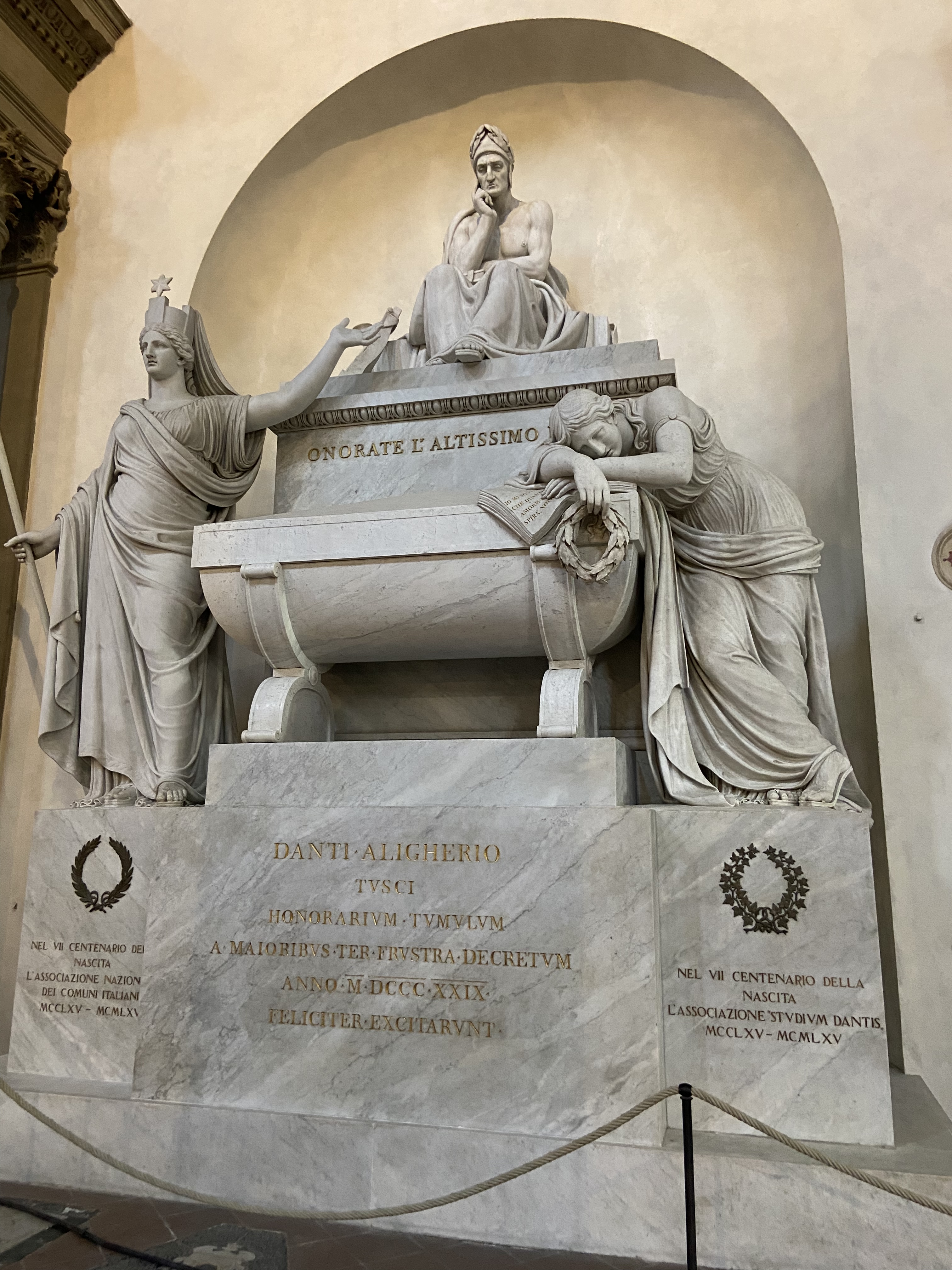
In the same main hall that houses the remains of Galileo, Michelangelo and Florence Nightengale in the Basilica of Santa Croce is a sculpture and remains of another, slightly less internationally infamous but greatly influential Italian. Dante Alighieri, a poet, writer and philosopher considered to be the “father of the Italian language” is shown with metaphorical Italy pointing at him and metaphorical literature weeping. The title of “father of the Italian language” was attached to him not only for the beauty of his prose and poems, but also because of the language he chose to write them in: Italian.
At the time, poems were written in Latin, restricting that material to the upper class who are educated enough to understand it. It was Dante’s belief, however, that this beauty should be accessible to all, and that there is beauty inherently existing in the Italian vernacular. The common Italian day to day language should therefore be placed at the heart of its citizen’s identity.
It was also his belief that “Beauty awakens the soul to act.” This was likely a driver to the decision to make the beauty of words more accessible. In doing so, he did more than just allow the mainstream Italian population to take in the beauty of poetry, but also ignite their will to act passionately, with a deepened love for their language and culture. This coincided with a period of internationalization in Florence, with an ever growing influence across the world.
It was a happen (and happy) chance that I was in Florence to learn this at all, having to take a detour on my way to Morocco for a dear friend’s wedding. I quickly booked an Airbnb near the church I was walking past, only to be completely floored on arrival when the host mentioned me it was the building where Dante had grown up. Later research showed that his building no longer existed, and I am not sure if the 4th floor “shabby chic studio” that I slept in was the exact style studio Dante slept in either, but it was true that it was on his road. I thought it worth mentioning because the studios on higher floors which helped a poet access the formational thoughts he would later share in an accessible language were physically inaccessible to a different type of person who cannot climb those stairs.
And that is the tricky part about accessibility: the ways in which a place or an experience needs to be improved to be accessible is situational.
Pair that fact with how technology products now drive almost every part of our lives universally, and accessibility becomes an almost overwhelming topic at face value to tackle. As an executive or product person, questions start to arise including – where do I start? How do I ensure all the bases of accessibility are managed? How do I manage the trade offs of an ever more competitive landscape and need for innovation on my roadmap with retroactively making past features more accessible? Is there a clear revenue add? How do I sell this time investment to my board of directors if the short term trade offs aren’t financially rewarding?
To not acknowledge these as valid concerns would be doing a disservice to the chances of a company taking the next steps on their accessibility journey, and it must be stressed that it is a journey. There are no silver bullets.
Luckily, industry governance and compliance looks to tackle overwhelming problems like these and give clear baseline critique as well as distilled next steps. Specifically, the Information Technology Industry Council (ITI) and the U.S. General Services Administration (GSA) created the Voluntary Product Accessibility Template (VPAT). In it, guidelines helping companies baseline themselves to a specific set of requirements within a compliance level are given. These requirements ensure that the benefits given to one type of person is also allowed for people who may not have been able to access them otherwise, including those who have trouble seeing, moving their hands, and hearing. It can range from app wide functionality of screen reading or content organization, to specific requirements which ensure that warnings are not closed until prompted by the user in case they are not able to absorb its content on time before it disappears. Much of these requirements would benefit everyone, but are especially important in making the app accessible at all to some.
Initially, the requirements within the standard a company is trying to achieve that are not being met should be taken as next steps, prioritised by effort and impact. On achieving that specific level of compliance, auditing and bridging the gaps of the next standard compliance level becomes the new next step. This gives guidelines and helps the formation of a cohesive short and longterm plan for companies.
This governance is now leaking into regulations within countries, with governments choosing to help (read lightly force) organizations incentivize the decision to become more accessible by disallowing sales of products which are not aiming to bridge this gap. This includes countries like France for example, which are helping push companies into making these strategies quickly.
As these regulations slowly start to feel like red tape, it is important to remember that « beauty awakens the soul to act ». As leaders and creators then, let us make sure we are taking the steps to allow for everyone to experience the beauty and function of our products, in the most accessible and presentable way possible for them.
For we are a better world when we unlock the global potential through beauty, awakening as many souls possible to act with passion. And let us give those beautiful souls all the product tools that are needed to thrive in this new world.
 Yaman’s Deep Dive